Nestlé Launches “Nestlé for Good” Campaign to Advance Nutrition, Communities and Sustainability in Nigeria

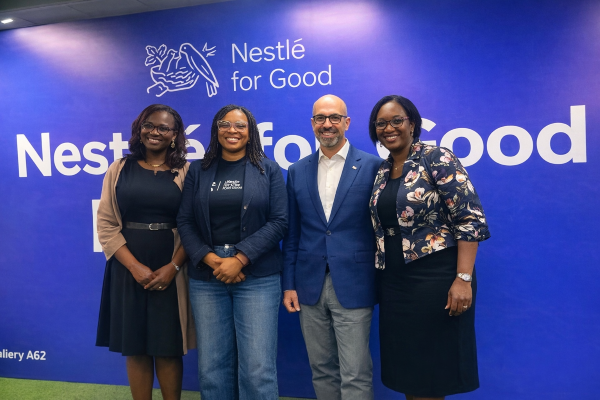
Nestlé Nigeria Plc has launched a new corporate initiative titled “Nestlé for Good,” aimed at strengthening the company’s impact in nutrition, community development and environmental sustainability across Nigeria.
Speaking during the media launch in Lagos, the company’s Managing Director, Wassim Elhusseini, said the campaign consolidates several long-running programmes through which the company contributes to national development.




According to him, Nestlé’s long-standing presence in Nigeria carries a responsibility that extends beyond product delivery to broader societal impact.
“Nestlé has been part of Nigerian households for more than six decades, earning a place at family tables, in lunch boxes and at key life moments. This presence is a privilege and it comes with responsibility,” he said.
Elhusseini explained that large-scale companies must be accountable not only for their products but also for their influence on society, communities and the environment.
He noted that Nestlé’s global Creating Shared Value business philosophy guides its approach to ensuring that economic performance goes hand-in-hand with social progress.
Campaign Built on Three Strategic Pillars
Also speaking at the launch, Victoria Uwadoka said the campaign highlights Nestlé’s contributions through three major pillars:
- Improving Nutrition
As a leading food and beverage manufacturer, the company aims to support healthier diets and improved access to nutrition for Nigerian families. - Thriving Communities
Nestlé continues to invest in initiatives that improve livelihoods, support education and expand access to clean water in communities where it operates. - Protecting the Planet
Environmental sustainability remains a major priority, with programmes designed to reduce environmental impact and support climate resilience.
“If we do not protect the planet, then there is no point to everything else we are doing,” Uwadoka said.
The campaign will feature a series of documentary-style short films showcasing Nestlé’s initiatives in areas such as youth empowerment, women empowerment, climate protection and dairy development.
The programme is expected to run for nine months, highlighting partnerships and projects across Nigeria.
Government Commends Corporate Initiative
Officials from the Federal Ministry of Industry Trade and Investment commended the initiative, noting that responsible corporate investments play a critical role in Nigeria’s industrial development.
Mr Mohammed Bala, Director of Industrial Development in the ministry—represented at the event by Esther Popoola—said the campaign aligns with the government’s broader agenda for sustainable industrialisation.
He emphasised that private sector players remain essential drivers of innovation, productivity and job creation within the Nigerian economy.
“Companies with a long-standing presence in Nigeria play a vital role in supporting local manufacturing, skills development and economic inclusion,” he said.
Nutrition Experts Call for Collaboration
The Nutrition Society of Nigeria also welcomed the campaign, calling for stronger collaboration between stakeholders to improve national nutrition outcomes.
Dr Chioma Emma-Nwachukwu, represented by nutrition specialist Amaka Okwesilieze, urged the media to support public awareness efforts on healthy diets and nutrition education.
The society reaffirmed its commitment to working with Nestlé and other partners to promote improved nutrition across Nigeria.
BRANDECONOMY Insight
Corporate Sustainability as a Strategic Business Model
The “Nestlé for Good” campaign reflects a broader shift among multinational corporations toward integrating sustainability into their core business strategy rather than treating it as a peripheral corporate social responsibility initiative.
1. Shared Value as Competitive Advantage
Companies that embed sustainability within their operational model increasingly gain stronger consumer trust and long-term market resilience.
2. Nutrition as a Public Policy Priority
With Nigeria facing rising rates of malnutrition and food insecurity, private sector collaboration with public health institutions is becoming essential to addressing nutrition challenges.
3. Sustainable Supply Chains in Agriculture
Initiatives that support farmers, dairy production and responsible sourcing help strengthen Nigeria’s agricultural value chain while improving rural livelihoods.
4. Corporate Reputation in the ESG Era
In the emerging global Environmental, Social and Governance (ESG) framework, companies that demonstrate measurable social and environmental impact are increasingly rewarded with stronger investor and consumer confidence.
For Nestlé, the “Nestlé for Good” campaign represents both a sustainability commitment and a strategic reinforcement of its long-term presence in Africa’s largest consumer market.