Morocco Captain Hakimi Rejects AFCON Title in Stunning Twist, Backs Senegal as True Champions
“Senegal beat us fairly and deserved it"

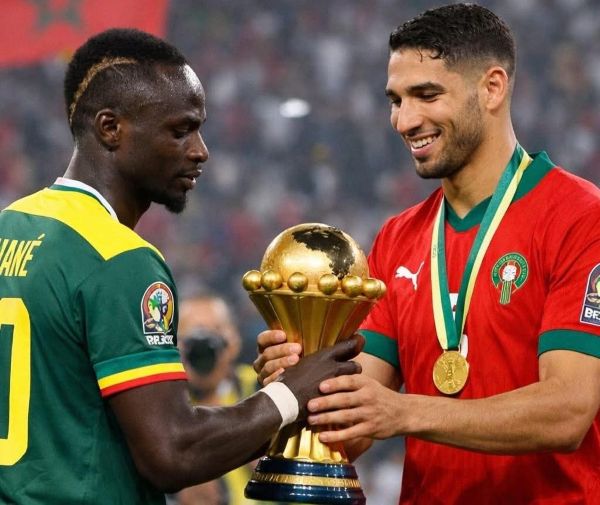 In a rare and deeply symbolic moment in global football, Achraf Hakimi has publicly rejected the Africa Cup of Nations (AFCON) title awarded to Morocco, insisting that Senegal remain the rightful champions based on sporting merit.
The Morocco national football team captain’s stance follows the controversial ruling by Confederation of African Football, which overturned Senegal’s on-field 1–0 victory and awarded Morocco a 3–0 administrative win after determining that Senegal forfeited the match due to a temporary walk-off during the final in Rabat.



A Captain’s Rebellion Against Administrative Victory
Hakimi’s reaction cuts through the legal technicalities with a purist footballing philosophy:
“Senegal beat us fairly and deserved it. It will be unfair to ruin their joy after the hard work,” Hakimi stated, firmly distancing himself from CAF’s decision.
The Paris Saint-Germain defender’s refusal to accept the trophy—reportedly even declining the winner’s medal—represents a rare act of player-led ethical defiance in modern football, where institutional rulings typically override individual sentiment.
His position underscores a fundamental tension:
Should football be decided by regulatory compliance or by what happens on the pitch?
The Controversy: From VAR Chaos to Legal Reversal
The crisis traces back to the AFCON final, where Senegal national football team players briefly walked off the pitch in protest over a contentious stoppage-time penalty awarded to Morocco.
- The match resumed after intervention
- Morocco missed the penalty
- Senegal went on to win 1–0 in extra time
However, CAF’s Appeals Board later ruled that:
- The walk-off breached Article 82 (refusal to play)
- Triggered Article 84 (forfeiture and 3–0 loss)
The result:
A legal victory for Morocco—but a moral and sporting debate for African football.
CAF’s Institutional Defence vs Growing Backlash
CAF President Patrice Motsepe has defended the decision, emphasising the independence of disciplinary and appeals bodies and the legal framework guiding the ruling.
Yet, backlash has been swift and global:
- Senegal’s federation has labelled the decision “unjust and unprecedented”
- The case is now heading to the Court of Arbitration for Sport (CAS)
- Players, analysts, and fans have questioned the optics and implications
Even within Morocco’s camp, Hakimi’s stance signals internal discomfort with the outcome.
Football Integrity vs Regulatory Authority
Hakimi’s rejection introduces a powerful narrative rarely seen in elite sport:
- Administrative legitimacy vs competitive legitimacy
- Rule enforcement vs spirit of the game
- Institutional authority vs player conscience
In effect, the Moroccan captain, Hakimi, has reframed the story—not as a victory, but as a moral dilemma for African football governance.
Implications for African Football
This episode could have far-reaching consequences:
- Credibility Risk: Perceptions of fairness in CAF competitions may face renewed scrutiny
- Regulatory Reform Pressure: Calls for clearer enforcement protocols during match disruptions
- Player Empowerment: Athletes asserting moral authority over institutional decisions
- Global Reputation: AFCON’s brand equity may be tested on the international stage
BRANDECONOMY Insight
When Governance Collides with the Game
Hakimi’s rejection is not just a football story—it is a governance case study.
1. The Rise of Athlete Moral Authority
Elite players like Hakimi are no longer passive participants:
- They shape narratives
- Influence public perception
- Challenge institutional decisions
2. AFCON’s Brand at a Crossroads
African football is competing globally for:
- Viewership
- Sponsorship
- Prestige
Controversies like this risk:
Eroding trust in outcomes and weakening commercial value.
3. Legal Wins vs Market Perception
Even if CAF is legally correct:
- Football is ultimately judged by fans, players, and global audiences
- Perception often outweighs procedural correctness
4. CAS Appeal: The Final Battleground
The pending CAS ruling will:
- Define the legal precedent
- Shape future enforcement of competition rules
- Determine whether sporting merit can override administrative sanction
Bottom Line
Hakimi’s decision may become one of the most defining moments in AFCON history:
A captain choosing sporting truth over institutional victory—forcing African football to confront the balance between law and legitimacy.