Moniepoint Study Highlights Digital Payments as Backbone of Nigeria’s Nightlife Economy

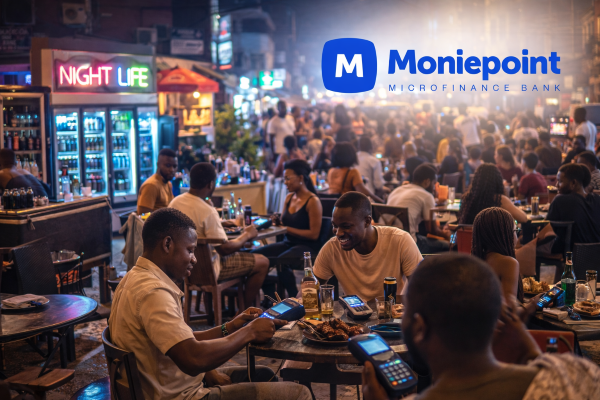 A new study by Moniepoint Inc. reveals that digital payments now dominate Nigeria’s nightlife economy, particularly within neighbourhood bars, roadside lounges and informal community venues.
The report, titled “The Business of Community Nightlife in Nigeria,” analysed transaction data from more than 27,000 bars, clubs and lounges operating on the company’s payment network, complemented by field research across multiple cities.




The findings show that bank transfers account for the largest share of nightlife payments, followed by card transactions, while cash usage continues to decline, largely due to security concerns. During peak hours, transfers outpaced card payments by nearly two million transactions on the network.
The study also indicates that while nightlife extends into the early hours, most spending occurs earlier in the evening. Transactions typically rise from around 8:00 p.m., peak before midnight and decline thereafter, even when venues remain active.
In terms of employment impact, the report estimates that at least 54,000 Nigerians are engaged in nightlife-related work nightly. Local bars increase staffing by 30 to 50 per cent during peak nights, reflecting the scale of the informal entertainment economy.
Lagos leads in the number of nightlife outlets on Moniepoint’s network, followed by the Federal Capital Territory, Rivers, Delta and Edo states.
Commenting on the findings, Tosin Eniolorunda, Co-founder and Group Chief Executive Officer of Moniepoint Inc., said community nightlife operators form a critical part of Nigeria’s economic structure and deserve greater recognition and support.
He noted that beyond payments, the company provides tools such as credit facilities, same-day settlements and inventory management systems to help operators scale sustainably.
BRANDECONOMY Insight
The Moniepoint study offers deeper implications beyond nightlife trends. It signals a structural shift in Nigeria’s informal economy toward digital integration.
Three key insights emerge:
- Informal Sector Digitisation is Accelerating
Nightlife businesses — traditionally cash-heavy — are embracing transfers and card payments. This transition enhances financial traceability, improves liquidity cycles and reduces security risks. - Early-Night Revenue Concentration Reflects Consumer Behaviour Shift
Peak spending before midnight suggests evolving consumption patterns influenced by transportation safety, urban regulations and cost management by consumers. Operators must optimise pricing and staffing around these critical revenue windows. - Fintech as Infrastructure, Not Just Payment Tool
By offering credit, settlement and inventory management tools, fintech platforms are becoming embedded infrastructure within informal commerce. This strengthens data visibility, improves access to finance and potentially expands tax formalisation opportunities.
Nigeria’s nightlife economy, often viewed as peripheral, is emerging as a measurable economic subsystem powered by digital rails.
As digital payments deepen across informal sectors, fintech firms may increasingly shape not only transaction flows but also employment patterns, credit access and urban economic resilience.