MMA2 to Introduce Slot System in 2026 to Tackle Congestion, Improve On-Time Performance

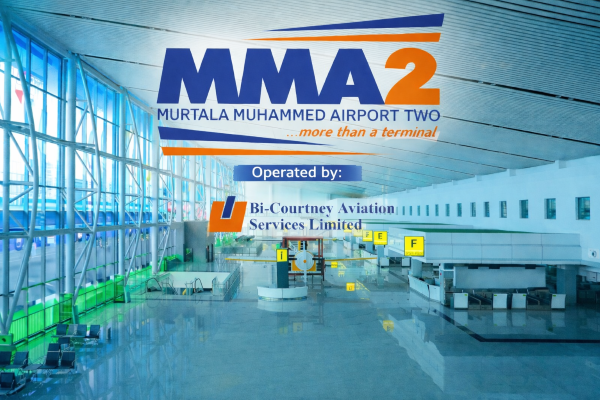
Nigeria’s most efficient domestic aviation hub, Murtala Muhammed Airport Terminal Two (MMA2), is preparing a major operational upgrade that could redefine traffic management at busy African airports.
From 2026, the terminal—operated by Bi-Courtney Aviation Services Ltd—will introduce a structured aircraft slot system, a globally recognised aviation tool designed to balance demand with infrastructure capacity, reduce congestion, and improve airline punctuality.




The move signals a decisive shift toward data-driven, globally aligned airport operations, positioning MMA2 as a reference point for operational discipline within Nigeria’s aviation ecosystem.
Why MMA2 Is Moving to Slot Coordination
Speaking on lessons from the 2025 year-end travel surge, Mr Remi Jibodu, Acting Chief Operating Officer, Bi-Courtney Aviation Services Ltd., said the peak season once again underscored the urgency of tighter coordination across airlines, ground handlers, and terminal operators.
“The year-end peak period highlighted the importance of structured coordination among all stakeholders operating within the terminal environment,” Jibodu stated.
“In 2026, MMA2 will introduce a structured slot system to balance demand and capacity across the airport terminal. This will improve aircraft movement coordination, reduce congestion during peak periods, enhance on-time performance for our airline partners, and enable better planning and deployment by ground handling companies.”
Globally, slot systems are standard at capacity-constrained airports—from London Heathrow to Dubai International—where runway, apron, and terminal limits require predictable scheduling discipline rather than reactive traffic management.
What the Slot System Means in Practical Terms
Under the planned framework, aircraft arrivals and departures at MMA2 will be time-sequenced and capacity-matched, reducing:
- Apron congestion and aircraft stacking
- Delays caused by overlapping airline schedules
- Pressure on passenger processing and baggage systems
- Operational friction between airlines and ground handlers
More importantly, it enables predictive planning, allowing airlines to optimise fleet deployment while improving passenger reliability—an increasingly critical metric in Nigeria’s competitive domestic aviation market.
Operational Resilience Proven in 2025
Jibodu noted that MMA2 successfully navigated the intense 2025 festive travel season, recording strong operational outcomes despite elevated traffic volumes.
To sustain uninterrupted flight operations, the terminal:
- Extended operating hours beyond scheduled shutdown periods
- Accommodated late-night and delayed flights
- Maintained full daily infrastructure maintenance without compromise
- Deployed additional ground-support resources in collaboration with airline partners
These measures, he said, reinforced MMA2’s reputation for operational flexibility, safety discipline, and service reliability, even under peak-load conditions.
Security, Passenger Flow and Technology Gains
Beyond aircraft movement, MMA2 also recorded measurable improvements in security and passenger-support systems.
Upgraded CCTV surveillance and monitoring infrastructure enhanced real-time visibility across the terminal, supporting faster response times and improved crowd management—critical elements for a high-throughput domestic hub.
Non-Aeronautical Revenue and Passenger Experience Also Rise
On the commercial and customer-experience front, Mr Kola Bamigboye, Head, Space & Premises Management and Acting COO, Bi-Courtney Aviation Services Ltd., highlighted strong momentum across non-aeronautical services.
“Beyond aeronautical operations, MMA2 recorded significant successes across its non-aeronautical services, further strengthening the overall passenger experience,” Bamigboye said.
“From retail and concession management to enhanced passenger amenities, our objective has been to deliver a convenient, comfortable, and engaging terminal environment. We are well-positioned to sustain this momentum in 2026.”
For modern airports, non-aeronautical revenue—retail, concessions, and passenger services—is now a core profitability pillar, not a side activity. MMA2’s progress in this area aligns with global airport business models.
BRANDECONOMY INSIGHT
The planned slot system marks a quiet but consequential reform in Nigeria’s domestic aviation architecture. While flashy terminal expansions often dominate headlines, capacity discipline, schedule integrity, and operational coordination are what truly determine airport efficiency.
If effectively implemented, MMA2’s slot regime could:
- Set a benchmark for other Nigerian airports
- Improve airline economics through reduced delays
- Enhance passenger trust in domestic air travel
- Strengthen Nigeria’s credibility in regional aviation standards
In an industry where minutes translate into millions, structure—not scale—is the next frontier of competitiveness.