Farmers See Rice Prices Falling Further as Lagos Cuts Lagos Rice to N57,000

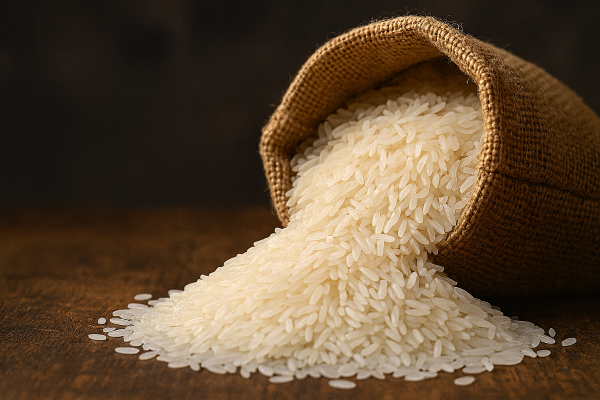
Nigeria’s rice market is entering a new phase of price correction as Lagos State’s recent decision to slash the price of Lagos Rice from N64,000 to N57,000 per 50kg bag triggers competitive market forces across the value chain.
Farmers’ associations in Lagos say this bold move by Governor Babajide Sanwo-Olu is set to drive further price reductions, deepen competition, and offer consumers fresher, safer and nutritionally superior rice compared to older imported alternatives.




Their projections come at a critical moment when food inflation pressures have strained household budgets and demand for staples traditionally spikes ahead of Christmas and New Year celebrations.
Lagos’ Strategic Price Slash Is Reshaping the Market
Vice Chairman of the All Farmers Association of Nigeria (AFAN), Lagos/Southwest, Sakin Agbayewa, praised the state government’s intervention, describing the new pricing scheme as a catalyst for market realignment.
According to him, the new Lagos Rice price point of N57,000 is not just competitive—it is triggering a chain reaction across retail channels:
Current Market Comparison
- Lagos Rice: N57,000 (freshly milled, higher nutritional integrity)
- Imported Rice: N52,000 – N56,000 depending on location
- Border communities: As low as N52,000
- Main markets: N54,000 – N55,000
Agbayewa argues that consumers who focus only on cheaper imports risk sacrificing freshness, food safety and nutritional value, noting that much-imported rice has been stored for 3–5 years before reaching Nigerian shelves.
He states emphatically:
“If you want quality and safety, Lagos Rice at N57,000 is a better buy than cheaper, years-old imported rice.”
A Strong Boost for Local Production and Food Security
Chairman of the Rice Farmers Association of Nigeria (RIFAN), Lagos chapter, Raphael Hunsa, described Lagos’ pricing intervention as both timely and strategic, especially heading into the festive season when demand peaks.
He highlights that price stability is directly tied to production capacity:
Key Drivers of Sustainable Price Reduction
- Year-round rice cultivation
- Strengthened milling capacity
- Continued government support for smallholder farmers
- Expansion of irrigation and mechanised clusters
Hunsa said Lagos’ action not only benefits consumers but restores confidence among local farmers who are now seeing real policy-driven demand for their produce.
“If farmers produce year-round, rice prices will stabilise—and Lagos is showing leadership in achieving that.”
With prices easing and fresh stock entering the market, Hunsa predicts a more affordable Christmas season for households across the state.
BRANDECONOMY INSIGHT
Lagos’ decision to peg the price of Lagos Rice at N57,000 is more than a discount—it is a market signal with powerful economic implications.
1. Lagos is weaponising price to strengthen food sovereignty
By making quality local rice more affordable, the state is actively shifting consumer preference away from imports and reinforcing domestic agricultural value chains.
2. The intervention pressures supply chains to adjust
Traders and millers in other states will likely drop prices in response to Lagos’ new benchmark, making this a national ripple effect, not a local one.
3. Freshness and food safety are becoming competitive differentiators
Consumers are starting to understand the difference between fresh, recently milled rice and multi-year-old imported varieties.
4. The festive season will accelerate redistribution of demand
With demand rising in December, Lagos’ price peg ensures affordability, increases consumer confidence, and reduces the likelihood of price gouging.
5. Lagos is repositioning itself as a food market stabiliser
From Imota’s mega rice mill to its distribution networks, Lagos is quietly building one of Nigeria’s most influential food security systems.
This is not just a price cut—it is a strategic restructuring of Nigeria’s rice economy.