 Few geopolitical moves carry the systemic risk of closing the Strait of Hormuz — the narrow maritime artery through which roughly 20% of the world’s oil and gas supply flows daily.
Iran’s declaration that the Strait is closed — accompanied by warnings that it will fire on vessels attempting passage — marks one of the most consequential escalations in the ongoing Middle East conflict.


Markets have responded swiftly. Oil and gas prices surged. Shipping routes stalled. Energy infrastructure came under drone attack. And investors are recalibrating global risk exposure.
This is no longer a regional flashpoint. It is a global economic stress test.
The Strategic Geography: Why Hormuz Matters
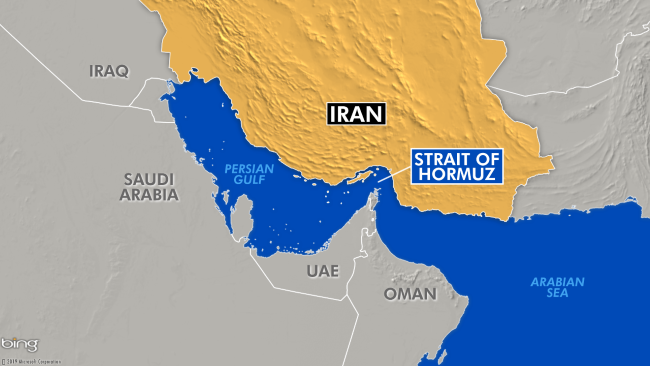
The Strait of Hormuz lies between Iran and Oman, linking the Persian Gulf to the Arabian Sea. At its narrowest point, it spans just 21 miles, with shipping lanes only two miles wide in each direction.
On average:
- Over 20 million barrels of crude, condensate and refined fuels pass through daily.
- Major exporters including Saudi Arabia, UAE, Kuwait, Iraq, and Iran rely on it.
- Qatar ships nearly all of its liquefied natural gas (LNG) exports through the strait.
In short, Hormuz is the pressure valve of global energy markets.
Immediate Market Reaction
The announcement triggered sharp volatility:
- Brent crude briefly surged to around $82 per barrel.
- European benchmark gas prices spiked as much as 50% intraday before closing nearly 39% higher.
- Natural gas futures surged following QatarEnergy’s suspension of LNG production after drone strikes on facilities in Ras Laffan Industrial City.
Meanwhile, Saudi Aramco temporarily shut its major Ras Tanura refinery after a drone strike.
International shipping near the strait has slowed dramatically, with maritime authorities reporting vessel strikes and near-miss projectile incidents.
Financial Markets: Volatility Without Panic — Yet
Global equity markets reacted but stopped short of panic:
- The Nasdaq and S&P 500 dipped before recovering marginally.
- London’s FTSE 100 fell 1.2%, dragged by airline and banking stocks.
- France’s CAC-40 dropped 2.2%.
- Germany’s DAX fell 2.6%.
Energy and defence stocks were among the few gainers, reflecting capital rotation into perceived safe sectors.
Energy analysts note that markets are waiting to see whether oil transport infrastructure becomes a sustained target.
As one energy strategist observed, the critical variable is whether traffic through Hormuz resumes — if it does, price pressures may ease; if not, escalation premiums will intensify.
Shipping Disruption: The Cape of Good Hope Alternative
If the strait remains effectively closed, vessels would be forced to reroute around the Cape of Good Hope, adding:
- Approximately 10 extra days to transit times
- Roughly 30% higher shipping costs
- Significant reduction in global shipping capacity
Prolonged rerouting would strain supply chains, slow manufacturing inputs and accelerate inflationary pressures globally.
The shipping freeze, described by some analysts as “unprecedented,” is already prompting carriers to seek safe haven and delay bookings.
Strategic Analysis: Escalation Economics
Iran’s move is not merely military — it is economic leverage.
By threatening Hormuz, Tehran introduces three layers of pressure:
1️⃣ Energy Shock Transmission
Higher oil and gas prices feed directly into global inflation and monetary policy recalibration.
2️⃣ Supply Chain Compression
Delayed shipments reduce effective global capacity and strain industrial production.
3️⃣ Financial Risk Repricing
Risk premiums rise across equities, currencies and sovereign bonds.
For import-dependent economies, the vulnerability is immediate. For exporters, the gains may be offset by geopolitical instability.
The Broader Conflict Context
The closure follows intensifying U.S.–Israeli strikes on Iranian territory and retaliatory missile campaigns across the Gulf.
Drone strikes on energy infrastructure in Qatar and Saudi Arabia indicate a widening battlefield where economic assets are increasingly strategic targets.
Should further energy infrastructure be hit — especially LNG terminals or large refineries — price spikes could accelerate beyond current levels.
BRANDECONOMY Insight
The Strait of Hormuz is the world’s most economically sensitive maritime chokepoint. Its closure — even partially — is a systemic event.
Three structural implications stand out:
- Energy Risk Premium Is Back.
Oil markets may now embed a sustained geopolitical premium, especially if maritime traffic remains disrupted. - Inflation Risk Reignites.
Higher fuel and gas prices complicate central bank rate-cut trajectories globally. - Supply Chains Face a New Bottleneck.
Extended transit routes compress shipping capacity and amplify manufacturing delays.
The market is not panicking — but it is repositioning.
If Hormuz reopens quickly, volatility may subside. If the closure hardens into policy or military enforcement, the economic consequences will extend far beyond the Gulf.
This is no longer a headline risk. It is a structural risk to global energy security.