Gospel Music Giant Ron Kenoly takes Final Bow at 81
Impacting the Architecture of Modern Worship Forever

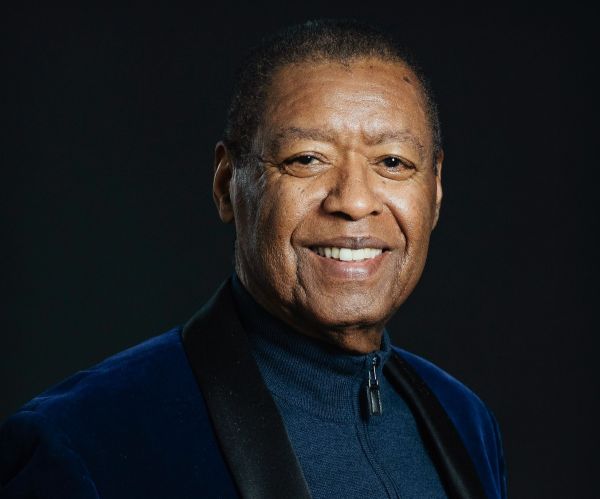
The passing of Ron Kenoly at 81 closes a defining chapter in the global worship economy—but it does not end the system he built. Kenoly was not simply a singer of songs; he was an institutional architect who professionalised worship leadership, globalised congregational sound, and reshaped how faith-based music creates cultural, spiritual, and economic value across continents.
At a moment when gospel and worship music now sit firmly inside global streaming platforms, mega-conferences, and multinational church networks, Kenoly’s life work explains why this ecosystem functions—and how it can endure.




Why This Matters Now
Faith-based music has quietly become one of the most durable segments of the global entertainment industry. It travels across borders with minimal localisation costs, builds multigenerational audiences, and sustains long catalog lifecycles. Ron Kenoly’s death is therefore not just a moment of mourning; it is a moment of reckoning for a sector he helped industrialise without commercialising its soul.
His legacy matters because modern worship—now a multi-billion-dollar global movement—rests on principles he codified decades ago: participation over performance, theology over theatrics, and leadership over celebrity.
Context: From Choir Loft to Global Platform
Before the 1990s, contemporary worship lacked a unifying sound and scalable model. Churches operated locally; recordings were secondary; worship leaders were largely invisible beyond their congregations.
Kenoly disrupted this quietly but decisively. Drawing from gospel, R&B, orchestral arrangements, and congregational call-and-response, he engineered a sound that was emotionally accessible, theologically grounded, and globally transferable.
His 1992 album Lift Him Up became the fastest-selling worship album of its era—not because it chased charts, but because it solved a problem churches everywhere shared: how to lead people, not entertain them.
Core Analysis: Kenoly’s Strategic Genius
1. Worship as Infrastructure, Not Performance
Kenoly insisted on being called a worship leader, not a gospel star. This distinction reframed the role as functional leadership—guiding communal experience rather than commanding attention. That philosophy made his music infinitely reusable by churches worldwide.
2. Sound That Scales Across Cultures
By blending African-American gospel traditions with global melodic structures, Kenoly created worship music that translated seamlessly to Africa, Europe, Latin America, and Asia. This is why his songs became staples in Nigerian churches decades before streaming existed.
3. Catalog Longevity Over Hit Cycles
Songs like Majesty, Ancient of Days, Anointing, and Sing Out were engineered for repetition, not novelty. This design choice produced enduring catalog value—one of the most underappreciated assets in music economics.
4. Talent Multiplication, Not Talent Hoarding
Through the Academy of Praise, Kenoly institutionalised mentorship, ensuring that worship leadership would outlive him. This is ecosystem thinking, not artiste branding.
Africa’s Connection: Influence Without Borders
Tributes from African worship leaders underline Kenoly’s continental impact. Nigeria’s Nathaniel Bassey described him as a generational psalmist whose songs formed the spiritual vocabulary of today’s worship leaders. Others, including Israel Houghton, echoed his role as mentor, not merely inspiration.
Kenoly did not tour Africa as an export; he integrated Africa into the worship commons. That distinction explains his enduring resonance.
Implications for the Creative Economy
For artists and labels, Kenoly’s career offers counterintuitive lessons:
- Longevity beats virality in faith-based music economics
- Functionality drives adoption more than personal branding
- Spiritual authenticity compounds commercial sustainability
- Education and mentorship create defensible ecosystems
For policymakers and cultural investors, worship music represents a soft-power channel that combines moral authority, cultural diplomacy, and creative employment—often without state intervention.
Forward Outlook: The Worship Economy After Kenoly
The future of worship music will be increasingly digital, decentralised, and global—but its core principles will remain Kenoly’s. As AI-generated music, platform algorithms, and shortened attention spans reshape entertainment, worship will continue to reward depth over speed and meaning over metrics.
Kenoly’s passing challenges today’s worship leaders to decide whether they are building platforms—or institutions.
His life answered that question decisively.
BRANDECONOMY INSIGHT
Ron Kenoly understood something most creative industries still struggle to learn: culture endures when it is designed to be used, not consumed. By centring worship on participation rather than personality, he built one of the most resilient creative ecosystems of the last half-century.
In economic terms, Kenoly created infinite reuse value. His songs are not tied to trends, tours, or eras; they regenerate meaning every time a congregation sings them. That is the highest form of intellectual property—one that appreciates spiritually while remaining commercially viable.
As Africa and the Global South increasingly shape global culture, Kenoly’s model offers a blueprint: build works that travel without translation, empower others rather than dominate space, and treat legacy as strategy, not sentiment.
The worship economy did not lose a star. It lost an architect.