FinTech Association Backs CBN Reforms to Strengthen Banking Security

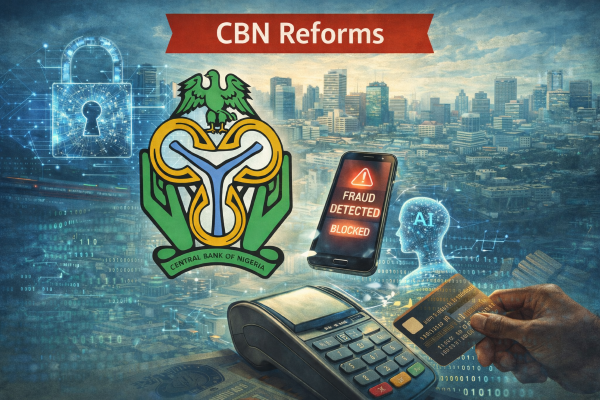 The FinTech Association of Nigeria has expressed strong support for recent regulatory measures introduced by the Central Bank of Nigeria (CBN), saying the CBN Reforms and policies will improve banking security, curb digital fraud, and strengthen trust in Nigeria’s financial system.
Mr. Oluwaseun Adesanya, National Treasurer of the FinTech Association of Nigeria, made the remarks in Lagos while speaking on the sidelines of an induction and award ceremony organised by the Chartered Institute of Bankers of Nigeria (CIBN).



Regulatory Measures Target Digital Banking Risks
Adesanya said the recent regulatory actions taken by the CBN were designed to enhance security across Nigeria’s rapidly expanding digital banking ecosystem.
The apex bank introduced several policy measures within a short period, including a rule restricting banking applications to a single registered device per user, aimed at reducing the risks associated with account compromise and unauthorised access.
According to Adesanya, the CBN Reforms represent a proactive effort by regulators to protect customers and strengthen confidence in digital financial platforms.
He noted that improving security frameworks will also make digital banking more reliable and convenient for customers.
“These policies are meant to safeguard the financial ecosystem, protect customers and reinforce confidence in digital banking platforms,” he said.
Stronger Credit Frameworks Expected
Adesanya added that the CBN Reforms could also improve credit administration within the banking sector.
According to him, stronger regulatory oversight and improved data security could help banks better manage lending risks and reduce losses associated with non-performing loans.
“This will bring greater discipline into the financial system and help financial institutions manage credit facilities more effectively,” he said.
He emphasised that implementing multiple reforms simultaneously was necessary to address emerging risks within Nigeria’s financial ecosystem.
“There is no better time than now for the industry to implement improvements that will deliver value to all stakeholders,” he added.
Artificial Intelligence Emerging as Anti-Fraud Tool
Adesanya also highlighted the growing role of Artificial Intelligence (AI) in combating fraud within the financial services industry.
He explained that AI-driven systems are capable of analysing transaction patterns and identifying unusual activities that deviate from a customer’s normal behaviour.
For example, if a user who typically performs transactions during the day suddenly initiates a transaction late at night, automated systems can flag the activity for further verification.
According to him, such predictive capabilities allow financial institutions to detect and prevent fraudulent transactions before financial losses occur.
Adesanya urged banks and financial technology companies to continue investing in advanced security technologies.
He warned that organisations that fail to adapt to technological innovation risk falling behind in an increasingly digital financial environment.
Call for Consumer Awareness
The FinTech Association official also stressed the importance of customer education in building a secure digital financial ecosystem.
He advised banking customers to remain vigilant when using digital financial services and to seek information about new technologies and regulatory measures.
Adesanya added that sustained collaboration among regulators, financial institutions, technology providers and consumers remains essential to maintaining trust in Nigeria’s financial system.
BRANDECONOMY Insight
The support expressed by the fintech industry for the CBN’s recent reforms reflects a crucial shift in Nigeria’s financial sector: security is becoming the central pillar of digital banking growth.
Nigeria’s digital finance ecosystem has expanded rapidly over the past decade, driven by mobile banking, fintech startups and the government’s cashless policy.
However, the same technologies that enable convenience also expose financial institutions and customers to new cybersecurity risks.
Three strategic developments are shaping the industry.
1. Digital Banking Is Now Nigeria’s Financial Backbone
Millions of Nigerians now conduct daily transactions through mobile banking apps, digital wallets and instant transfer systems.
This shift means that cybersecurity failures can quickly undermine public confidence in the financial system.
Regulatory interventions aimed at protecting digital platforms are therefore becoming increasingly critical.
2. Fraud Prevention Is Becoming Technology-Driven
Artificial Intelligence and data analytics are emerging as powerful tools for fraud detection.
By analysing transaction behaviour patterns in real time, banks can identify suspicious activities before they escalate into major financial losses.
This predictive approach represents a significant evolution from traditional fraud investigation methods.
3. Trust Is the Currency of Digital Finance
For Nigeria’s fintech ecosystem to continue growing, customers must trust that their funds and data are secure.
Regulatory reforms that enhance security standards are therefore not just compliance measures—they are confidence-building mechanisms for the entire digital financial economy.
As Nigeria positions itself as one of Africa’s largest fintech markets, maintaining strong cybersecurity frameworks will be essential to sustaining innovation and protecting consumers.