 The Federal Government has formally invited the African Development Bank (AfDB) to partner on the design and financing of the Digital Value Chain Infrastructure for Boosting Employment (D-VIBE), also known as Project BRIDGE.



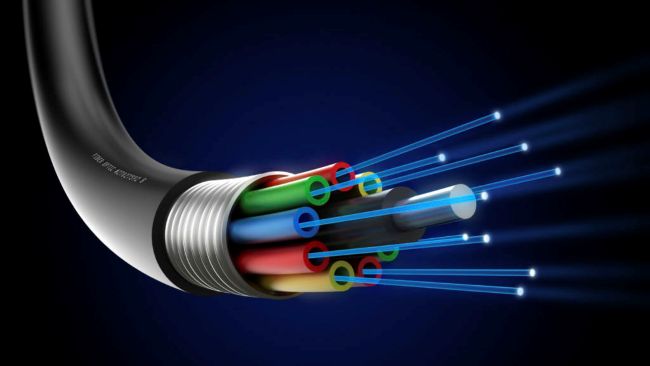
According to a statement published by the AfDB, the initiative aims to expand Nigeria’s national fibre backbone from 35,000 kilometres to at least 125,000 kilometres—positioning the country with Africa’s third-longest terrestrial fibre network, after Egypt and South Africa.
The proposed expansion is intended to close critical infrastructure gaps, as existing fibre coverage is estimated to meet only about one-third of Nigeria’s national connectivity requirements.
By extending broadband infrastructure to underserved and unserved communities, the project seeks to deepen digital inclusion, strengthen broadband penetration, and stimulate job creation across the digital value chain.
As part of implementation, a consultancy firm will be engaged to provide communications, planning, and stakeholder management services for D-VIBE-related activities. The firm will support the Project Implementation Unit (PIU), the Federal Ministry of Communications, Innovation and Digital Economy (FMCIDE), and the AfDB in coordinating and delivering project events.
Its mandate will include managing event communications, stakeholder engagement, protocol coordination, and pre- and post-event support, in alignment with the project’s Stakeholder Engagement Plan (SEP), which was published as part of the Environmental and Social Requirements during project preparation.
The engagement is also expected to support AfDB-related financing processes for the initiative.
BRANDECONOMY Insight
Nigeria’s proposed fibre expansion from 35,000km to 125,000km is more than a telecommunications upgrade — it is an economic competitiveness strategy.
At present, limited fibre penetration acts as a structural constraint on productivity, digital entrepreneurship, fintech scaling, cloud adoption, e-government delivery, and remote work ecosystems. Expanding backbone infrastructure is foundational to unlocking Nigeria’s digital GDP potential — particularly as artificial intelligence, cross-border services, digital trade and remote operations increasingly define global commerce.
Fibre Is Economic Infrastructure — Not Just Telecom
Countries that lead in fibre density consistently outperform peers in:
- Broadband affordability
- Startup ecosystem growth
- Financial inclusion
- Digital services exports
- Remote employment participation
If executed effectively, a 125,000km backbone would:
- Reduce last-mile broadband costs
- Improve network redundancy and reliability
- Strengthen rural-urban digital integration
- Enable Tier-2 and Tier-3 city tech clusters
This has direct implications for SME productivity and youth employment.
Employment Multiplier Effect
D-VIBE’s employment framing is strategically important.
Fibre expansion creates jobs across:
- Civil engineering and trenching
- Network installation and maintenance
- Data centre growth
- Local content manufacturing
- Digital service startups
The longer-term impact, however, lies in enabling digitally native sectors — e-commerce, logistics tech, agritech, edtech, healthtech, fintech — to scale nationally and regionally.
AfDB’s Role Signals Blended Finance Strategy
By inviting AfDB into design and financing, Nigeria is signalling:
- Preference for concessional and development-linked capital
- Alignment with ESG and inclusive growth standards
- Structured stakeholder engagement through environmental and social frameworks
This reduces sovereign financing pressure while enhancing investor confidence.
However, financing is only one variable. Execution governance, right-of-way harmonisation, state-level coordination, and security of fibre assets will determine success.
The Strategic Risk
Infrastructure announcements in Nigeria historically face:
- Implementation delays
- Cost overruns
- Regulatory bottlenecks
- Vandalism and asset insecurity
Without strong inter-ministerial coordination and state cooperation, the 125,000km ambition could become another under-delivered target.
The Bigger Picture: Africa’s Digital Race
Egypt and South Africa currently lead in terrestrial fibre length. Nigeria’s population scale and entrepreneurial energy make it a natural digital powerhouse — but only if backbone infrastructure matches ambition.
If successfully delivered, this expansion could:
- Position Nigeria as West Africa’s digital transit hub
- Lower cross-border data costs within ECOWAS
- Strengthen AfCFTA digital trade frameworks
- Support Nigeria’s $1 trillion economy ambition
Strategic Bottom Line
Fibre is the new oil pipeline of the 21st century.
Project BRIDGE will only succeed if:
- Financing is matched by execution discipline
- State governments align on right-of-way reforms
- Private sector co-investment is structured transparently
- Policy consistency is maintained across administrations
If done right, this is not a telecom story — it is a structural economic transformation story.
And that makes it one of Nigeria’s most consequential infrastructure plays of the decade.