Nigeria’s electricity market recorded a notable improvement in financial performance and revenues in the third quarter of 2025, as power distribution companies strengthened revenue recovery amid gradual reforms in tariff discipline and market governance.
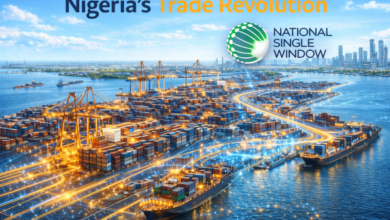
Data released by Nigerian Electricity Regulatory Commission show that electricity Distribution Companies (DisCos) collected ₦570.25 billion between July and September 2025, marking one of the strongest quarterly revenue outcomes in recent years.



The amount represents 80.7 per cent of the ₦706.61 billion billed to electricity consumers nationwide during the period — a clear improvement in collection efficiency and a signal of tightening commercial controls across the sector.
Why Q3 Matters for Nigeria’s Power Market
The Q3 performance reflects a decisive shift from chronic revenue leakages toward incremental financial discipline in the electricity value chain. Compared with the second quarter of 2025, when DisCos recovered ₦564.71 billion from ₦742.34 billion billed — an efficiency rate of 76.07 per cent — Q3 delivered a 4.63 percentage point improvement in collections.
For an industry long burdened by liquidity constraints, unpaid invoices and weak enforcement, the uptick signals growing alignment between tariffs, billing systems and consumer compliance.
DisCo-by-DisCo Performance: Winners and Laggards
The commission’s report highlights sharp disparities in operational efficiency across the distribution landscape:
- Ikeja Electricity Distribution Company posted a 100 per cent collection efficiency of revenues, effectively recovering all revenue billed during the quarter.
- Eko, Benin and Abuja DisCos followed closely, each exceeding 80 per cent collection efficiency.
- At the lower end, Kaduna DisCo recorded the weakest performance nationwide, with a collection efficiency of 45.67 per cent, underscoring persistent regional and structural challenges.
These variations reinforce the uneven pace of reform across Nigeria’s electricity market, where geography, customer mix, metering penetration and governance quality continue to shape outcomes.
What’s Driving the Improvement
Industry analysts attribute the stronger Q3 showing to a combination of factors:
- Improved tariff cost-reflectivity under regulated frameworks
- Gradual expansion of metering and billing transparency
- Tighter regulatory oversight and performance benchmarking
- Greater consumer responsiveness to structured billing regimes
While the gains remain fragile, they point to early traction in the long-running effort to restore market liquidity and reduce reliance on government intervention.
BRANDECONOMY INSIGHT
Revenue recovery is the oxygen of Nigeria’s power sector. The Q3 2025 numbers suggest the system is finally learning to breathe on its own — albeit unevenly. Sustaining this momentum will depend on enforcing performance contracts, accelerating metering, and closing the efficiency gap between top-performing and lagging DisCos. Without that, improved collections risk becoming episodic rather than structural. Unfortunately, the vast majority of electricity consumers are still holding the short end of the stick. They are forced to pay arbitrary and outrageous estimated bills while receiving scant power supplies. While revenues matter, electricity delivery matters even more.