West Africa awoke on Sunday to yet another tremor in a region increasingly defined by political volatility. But unlike the coups that reshaped Mali, Burkina Faso, Guinea, and Niger, Benin’s attempted takeover did not succeed. It collapsed under the weight of a loyalist military command, swift domestic resistance, and an unusually decisive response from the Economic Community of West African States (ECOWAS).




Yet the deeper story is not that the coup failed — it is why it happened, and why West Africa can no longer afford even the attempt.
In a region where democratic norms have been assaulted with unnerving frequency, Benin’s short-lived mutiny is both a warning and a window: a warning that no democracy is truly safe, and a window into the broader fragilities threatening West African stability.
A Mutiny Interrupted: What Really Happened in Cotonou
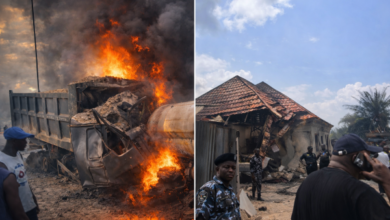
At dawn, gunfire shattered the calm around Cotonou’s presidential district. A faction of soldiers stormed the state broadcaster, announced President Patrice Talon deposed, suspended democratic institutions, and installed Lt.-Col. Pascal Tigri as head of a so-called “Military Committee for the Refoundation.”
Borders were declared closed. Signals to state TV and radio were cut. Soldiers patrolled key roads.
It was a script West Africa has seen many times — but this time, the ending was different.
Within hours:
- Loyalist forces regrouped
- Nigerian Air Force jets entered Benin’s airspace under ECOWAS mandate
- Nigerian and Beninese forces reclaimed the national broadcaster
- Coup forces were flushed from their strongholds
- Arrests began silently and systematically
By evening, Talon declared the crisis “fully under control,” praising military leaders “who remained republican and loyal.”
Thirteen soldiers were reportedly detained. Tigri’s status remains uncertain.
Benin — once considered a model of democratic stability — had survived a direct assault on its constitutional order.
ECOWAS Reacts With Uncharacteristic Speed
Faced with a coup in a member state historically viewed as stable, ECOWAS invoked Article 25(e) of its conflict-prevention protocol and ordered immediate deployment of its Standby Force.
Troops from:
- Nigeria
- Sierra Leone
- Ghana
- Côte d’Ivoire
were mobilised to reinforce Benin’s army and protect constitutional authority.
Nigeria acted as the lynchpin.
Responding to two urgent requests from Cotonou, President Bola Ahmed Tinubu deployed:
- Air Force fighter jets for interdiction and airspace security
- Ground units for rapid support missions
- Intelligence coordination teams
This operation was tactical, targeted, and symbolic — a demonstration that ECOWAS, facing existential doubts about its relevance, could still project real-time deterrence.
A Region Running Out of Democratic Bandwidth
The attempted coup in Benin cannot be viewed in isolation. It sits within a widening arc of instability that now stretches from the Atlantic coast to the Sahel’s heart:
- Burkina Faso
- Mali
- Niger
- Guinea
- Guinea-Bissau (attempted coup)
- And now Benin
Seventeen coups or attempts have rocked Africa since 2020.
The geopolitical drivers are layered and interconnected:
- Economic discontent and the erosion of middle-class stability
- Dwindling public trust in political elites
- Rising militarisation and armed non-state actors
- Competing geopolitical footprints from global powers
- Weak institutional resilience
Benin’s crisis showed that even countries celebrated for stability may be one political miscalculation away from rupture.
Why This Coup Failed: The Structural Factors
Several dynamics worked in Talon’s favour:
- Cohesion within the upper military hierarchy
- Rapid ECOWAS and Nigerian intervention
- Public fatigue with coups in neighbouring states
- Intelligence visibility on coup networks
- Political control ahead of the 2026 elections
Benin’s institutions bent under pressure — but they did not break.
This is not accidental. It is the product of deliberate political engineering, for better or worse, including tight control over dissent, exclusion of certain opposition actors, and structural reforms that strengthened the presidency.
Lessons for African Leaders: The Age of Easy Coups Is Over
1. Public Legitimacy Is a National Security Asset
Governments with broad legitimacy withstand shocks; those without become vulnerable to military opportunism.
2. Regional Deterrence Must Be Immediate and Visible
ECOWAS’ speed prevented a festering conflict. Delay is a coup’s greatest ally.
3. Militaries Require Democratic Immunisation
Professionalism must outweigh political temptation — or democracy becomes optional.
4. Economic Pressures Are Fuel for Instability
Inflation, unemployment, and social strain create a combustible environment.
5. Governance Failures Create Military Optionality
Where leadership is unresponsive, soldiers imagine themselves as solutions.
BRANDECONOMY Insight
Benin’s failed coup offers a rare moment of clarity in a region drifting toward democratic fatigue. It underscores three inescapable truths:
First, no West African democracy — no matter how stable its history — is immune to rupture.
Second, ECOWAS must evolve from a reactive club into a proactive security and governance architecture. Its survival now depends on credibility, not communiqués.
Third, Africa’s battle is not merely against coups, but against the deeper governance deficits, economic anxieties, and legitimacy crises that make coups seem like alternatives.
Benin survived Sunday’s shock.
But the region’s capacity to absorb more political earthquakes is diminishing.
West Africa stands at a democratic tipping point — one where each failed coup offers a warning, and each successful one reshapes the regional order.
BRANDECONOMY will continue to track these emerging geopolitical dynamics with the depth, precision, and clarity our readers expect.