Africa’s Creators Lead Bold Push for Free Movement as Influencers Sign Borderless Africa Declaration

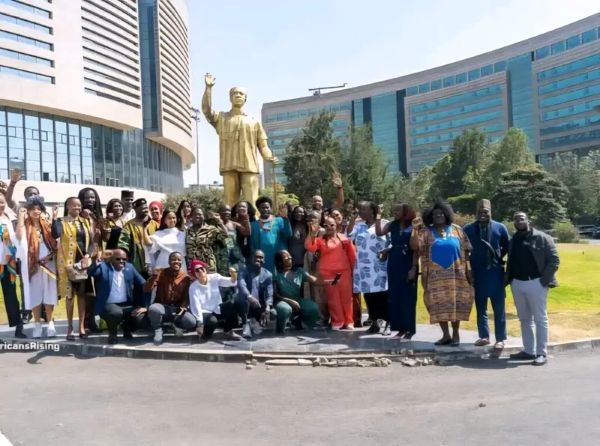
A new wave of African influencers, artists, digital creators, journalists, cultural leaders and policymakers has launched a powerful, people-driven movement calling for a borderless Africa, challenging governments across the continent to accelerate free movement and dismantle colonial-era mobility restrictions that continue to hinder unity, trade and creative exchange.
At a High-Level Influencers Forum on Borderless Africa hosted at the African Union (AU) Headquarters in Addis Ababa, 36 leading voices from across Africa and the diaspora signed the “Addis Ababa Influencers Declaration on Borderless Africa.”
The forum marked integration 141 years since the 1884–85 Berlin Conference, the historic colonial partition of Africa.




The collective message of the Borderless Africa Declaration is clear: Africa must move from rhetoric to action—from fragmented borders to seamless mobility, from policy statements to people-driven integration.
The Digital Generation Steps Into Continental Leadership
The declaration, championed by Africans Rising, is anchored on the belief that integration must be people-powered, not just policy-driven.
Amb. Fred Ngoga, Senior Advisor on International Partnerships at the AU Commission, emphasised that influencers and creatives are essential to driving public engagement around free movement:
“Integration is about people experiencing freedom across their own continent. Influencers have the power to make this real for millions of Africans.”
This marks a historic moment where digital creators—the individuals shaping culture, conversation and public consciousness—are moving from content to impact, leveraging platforms to push continental transformation.
Dismantling Colonial Borders: A Moral and Economic Imperative
Africans Rising Coordinator, Hardi Yakubu, did not mince words. He argued that Africa cannot continue blaming colonial boundaries while failing to dismantle them:
“We cannot keep complaining about the Berlin Conference when we have the power to undo its legacy. Borderless Africa must be localised in our policies, airports and daily mobility.”
Yakubu highlighted a glaring contradiction: Africans often pay in U.S. dollars to travel within their own continent—particularly to Addis Ababa, the seat of the AU.
A borderless Africa is not just ideological. It is an economic necessity for:
- The creative economy
- Intra-African trade
- Tourism
- Tech mobility
- Start-up investment
- Workforce circulation
This is the foundation of the African Continental Free Trade Area (AfCFTA)—yet still far from reality.
Influencers Back Borders-Free Vision with Tangible Action
To turn momentum into impact, participants announced the creation of a Borderless Africa Fund—a financing mechanism to support advocacy, public sensitisation, digital campaigns and grassroots initiatives promoting free movement.
Ghana’s Permanent Representative to the AU, Amb. Robert Afriyie, praised the influencers for their unified vision:
“Difficulty is not impossibility. When we own the narrative, we reclaim our power.”
He cautioned creators to use their platforms responsibly, reminding them that digital tools are the most powerful storytelling weapons of this generation.
African Creatives Take the Lead in Reimagining the Continent
Grammy-nominated musician and activist Rocky Dawuni described Africa’s creatives as global narrative architects:
“Africa has the creativity to populate millions of new worlds, but our potential remains unrealised.”
The community acknowledged that despite the adoption of the AU Protocol on Free Movement in 2018, only 32 of 55 countries have signed—while only four (Rwanda, Niger, Mali, São Tomé and Príncipe) have ratified it.
This limited progress underscores the urgency for creators and digital leaders to push governments toward action on the Borderless Africa Declaration.
Participants pledged to advocate for:
- Visa-free intra-African movement
- Affordable African travel
- Free mobility for creatives, entrepreneurs and innovators
- Stronger regional integration frameworks
- Full ratification of the AU Free Movement Protocol
The forum closed with a call for citizens across Africa and the diaspora to sign the Borderless Africa Petition, reinforcing a people-powered mandate.
BRANDECONOMY INSIGHT
The Addis Ababa declaration marks a seismic shift in Africa’s integration movement—from boardrooms to the creator economy.
1. Creators Are Now Policy Actors
African influencers command hundreds of millions of online followers. Their reach rivals—and often exceeds—traditional institutions. Their involvement transforms free movement from a political agenda into a cultural movement.
2. Borders Are the Biggest Obstacle to Africa’s Digital Future
A borderless Africa would unleash exponential growth in:
- Music
- Film
- Fashion
- Gaming
- Tech innovation
- Startup ecosystems
- Sports
- Tourism
The creative economy thrives on mobility—borders kill collaboration.
3. AfCFTA Cannot Work Without People Moving Freely
Trade agreements require human mobility. Entrepreneurs, investors, artisans, and creators cannot build a continental marketplace while locked behind hard borders.
4. Digital Advocacy Is Replacing Traditional Diplomacy
Influencers have more real-time contact with citizens than many politicians. Their ability to mobilise audiences is unmatched.
5. The Borderless Africa Fund Is a Game-Changer
For the first time, a sustained financing model exists to power grassroots integration efforts.
Africa’s creators are not waiting for governments—they are leading the movement.