Africa’s Creative Economy Summit Charts New Path for Talent, Investment and Global Market Growth

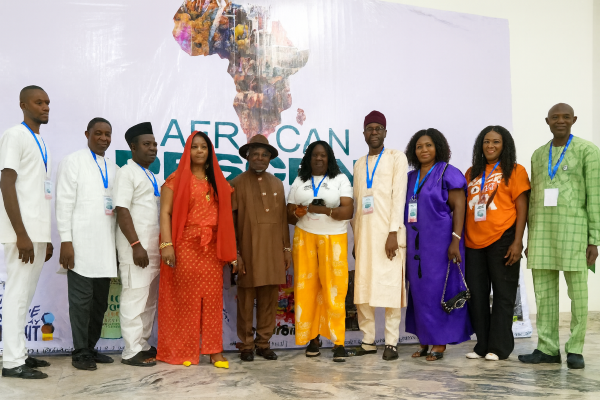
Africa’s creative economy received a major boost on Tuesday as the Global Initiative for Leadership Success (GILS), in partnership with the Federal Ministry of Art, Culture, Tourism and Creative Economy, convened a high-level summit in Abuja designed to unlock new opportunities for creators across the continent and the global African diaspora.
The event—African Descent Creative Industry Leadership Summit, Honours and Pageants, themed “Enhancing African Descent Economies Through Creative Industry”—brought policymakers, investors, creators, cultural leaders, and global market enablers into one unified conversation about how to reposition Africa’s creative talent pool for scale, structure, and sustainable economic impact.




A New Strategic Agenda for Africa’s Creative Powerhouses
In his welcome address, GILS President/CEO, Sunnie Chukumele, framed the summit as more than an event:
It is a strategic convening platform where Africa’s cultural capital, creative enterprise, digital innovation, and leadership ambition converge to shape a new economic frontier.
Chukumele emphasized that Africa’s creative industry—spanning film, music, fashion, visual arts, gaming, theatre, literature, digital media, tourism content, and cultural IP—is no longer just entertainment.
It is soft power infrastructure, global diplomacy, youth employment engine, and one of the continent’s most scalable non-oil economic assets.
He noted that the summit aims to address long-standing structural bottlenecks such as:
- Limited intellectual property protection
- Fragmented financing and distribution channels
- Skills and talent gaps
- Inconsistent policy support
- Limited integration with global markets
According to him, the creative economy of African descent people—across Africa, the Caribbean, Latin America, Europe, and the United States—holds a unique opportunity:
the ability to connect culture with commerce at global scale.
“Today, we assemble to reflect, refocus, and reimagine the possibilities,” Chukumele said.
“This summit bridges Africa with its diaspora and connects creators with the policymakers, investors, and partners who can unlock the next phase of transformation.”
Tourism and Creative Sectors as Engines of Inclusive Growth
Mrs. Ojemakinde Olufunke, Chief Tourism Officer at the Lagos State Ministry of Tourism, Arts and Culture, lauded the organisers and stressed that Nigeria must look beyond the limitations of white-collar job creation.
She argued that the creative and tourism sectors are among the fastest-growing contributors to GDP and employment globally, and Nigeria cannot afford to overlook their potential.
“The system cannot provide white-collar jobs for everyone. This summit is the kind of forward-thinking platform required to attract investors and grow Nigeria’s GDP,” she said.
Her remarks echo global data from UNESCO and UNCTAD indicating that creative goods and services already account for over $1 trillion in global trade, with Africa positioned as the next major growth frontier.

BRANDECONOMY INSIGHT
The Abuja summit reflects a clear paradigm shift in how African nations and organisations view the creative economy. No longer treated as an informal, passion-driven sector, the industry is now being framed as strategic infrastructure—one that can diversify national economies, shape global narratives, and create high-value jobs for a rapidly growing youth population.
Several reform priorities now define the next chapter of Africa’s creative evolution:
1. Institutional Strength & Policy Alignment
Sustainable growth requires strong IP laws, structured distribution channels, fiscal incentives, and coexistence of public and private sector enablers.
2. Diaspora Collaboration as Economic Power
The African diaspora is a trillion-dollar market. Connecting creators to diaspora capital, audiences, and global platforms unlocks exponential value.
3. Digital Infrastructure as the New Creative Currency
AI, streaming, online marketplaces, virtual tourism, and social commerce are redefining monetisation models.
4. Creativity as Soft Power & Diplomacy
Nigeria’s music, film, fashion, and digital expression increasingly shape global culture. Leveraging this soft power for economic diplomacy is a national asset.
The Abuja summit signals the beginning of a more structured, globally competitive creative economy playbook—one capable of elevating Africa’s cultural wealth into tangible prosperity.