Afreximbank Expands Narrative of African Transformation with Season Two of ‘Impact Stories’

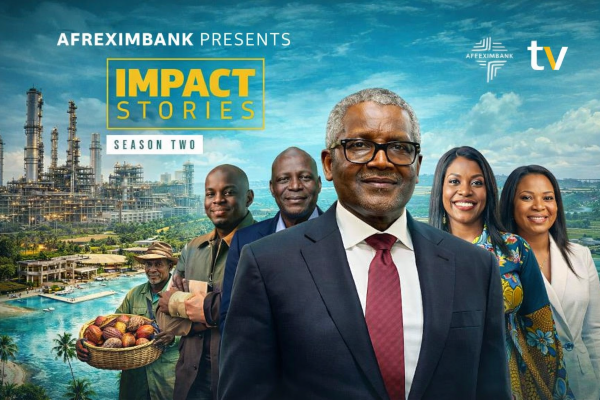 The African Export-Import Bank has unveiled the second season of its documentary series, “Impact Stories,” a visual storytelling initiative designed to showcase the real-world outcomes of the bank’s strategic investments across Africa and the global African diaspora.
The new season builds on the success of the debut series and expands its geographic and thematic reach, offering deeper insights into how targeted investments in infrastructure, industry, trade, and culture are reshaping economies across Global Africa.



Produced in partnership with CNN International Commercial’s branded content studio, Create, the six-episode documentary series travels across Africa and the Caribbean, highlighting projects that demonstrate the growing influence of Afreximbank in unlocking economic transformation.
A Pan-African and Diaspora Investment Story
According to Afreximbank’s Communications and Events Manager, Vincent Musumba, the new season presents powerful narratives from countries including Grenada, Ghana, Côte d’Ivoire, and Nigeria, illustrating how development finance can catalyse industrial expansion, infrastructure upgrades, and enterprise growth.
The series explores a number of high-profile projects and partnerships that are redefining economic possibilities across the continent and beyond.
Among the projects featured is the expansion of the Silversands Resort in Grenada, a flagship symbol of strengthening Africa–Caribbean cooperation and the growing economic ties between the two regions.
Another episode highlights the transformative impact of the Dangote Refinery in Lagos, a landmark industrial project expected to reshape Africa’s energy value chain by significantly reducing reliance on imported petroleum products.
The documentary also takes viewers to Aba in southeastern Nigeria, where the Geometric Power project is restoring reliable electricity supply to one of the country’s historic manufacturing centres—an intervention widely seen as critical to reviving the region’s famed entrepreneurial ecosystem.
From Cocoa Farms to Global Runways
Beyond heavy industry and infrastructure, the series also explores the broader ecosystem of Africa’s emerging industries.
One episode follows Ghana’s cocoa value chain, showing how Afreximbank’s partnership with Plot Enterprise is helping connect farmers to global markets while strengthening value-addition within Africa’s agricultural sector.
Another episode shines a spotlight on Africa’s rapidly expanding creative economy. It features Ghanaian fashion brand Boyedoe as it prepares for its international debut at Paris Fashion Week, supported by Afreximbank’s Creative Africa Nexus (CANEX) programme.
The final episode examines the renovation of the Félix Houphouët-Boigny Stadium in Abidjan, illustrating how investments in sports infrastructure can generate broad cultural and economic dividends for host communities.
Global Distribution Strategy
The six new episodes became available on Afreximbank TV from March 12, 2026, and will be distributed globally through high-impact digital placements on CNN’s platforms alongside a long-form television campaign on CNN International.
Afreximbank says the initiative is part of a broader strategy to demonstrate how development finance is translating into measurable economic and social progress across the continent and the diaspora.
Mrs. Anne Ezeh, Director of Communications and Events at Afreximbank, described the series as a storytelling platform that goes beyond conventional project reporting.
According to her, the films capture the spirit of collaboration behind the bank’s development initiatives, highlighting entrepreneurs, communities, and industries benefiting from strategic financing and partnerships.
From the production side, Martin Laing, Senior Director of Production and Global Executive Producer at CNN International Commercial’s Create Brand Studio, said the series was designed to put people at the centre of the narrative.
He noted that the collaboration has produced a compelling documentary format that brings human stories to the forefront while demonstrating the tangible economic impact of Afreximbank’s initiatives across Africa and its diaspora.
BRANDECONOMY Insight
Afreximbank’s “Impact Stories” series reflects a broader shift in how African development institutions are shaping global narratives about the continent.
Historically, Africa’s economic story has often been told through the lens of aid dependency or crisis reporting. Increasingly, however, institutions like Afreximbank are reframing the conversation around investment, industrialisation, trade integration, and diaspora economic cooperation.
Three strategic themes emerge from the documentary series:
- Africa–Caribbean Economic Integration
Projects like the Grenada resort expansion signal a growing effort to deepen economic linkages between Africa and the Caribbean—an emerging corridor often described as “Global Africa.” Afreximbank has been actively championing this agenda through trade financing, investment facilitation, and cultural exchange initiatives.
- Industrial Self-Sufficiency
The spotlight on the Dangote Refinery underscores Africa’s push toward energy sovereignty and value-chain control. Large-scale industrial projects of this nature are critical to reducing Africa’s dependence on imported refined petroleum products.
- The Rise of Africa’s Creative Economy
By highlighting fashion, sports infrastructure, and cultural industries, Afreximbank is signalling a broader development philosophy: economic transformation will not come solely from extractive industries or heavy infrastructure but also from creative industries, cultural exports, and intellectual capital.
In this sense, Impact Stories serves both as a documentary series and a strategic communications tool—projecting Africa as an emerging investment frontier rather than a development challenge.
For investors, policymakers, and entrepreneurs, the message is clear: Africa’s transformation narrative is increasingly being written by Africans themselves.