Boardroom Reset at Access Bank: Why Ifeyinwa Osime’s Chairmanship Signals a Strategic Governance Shift
What Osime Brings to the Chair

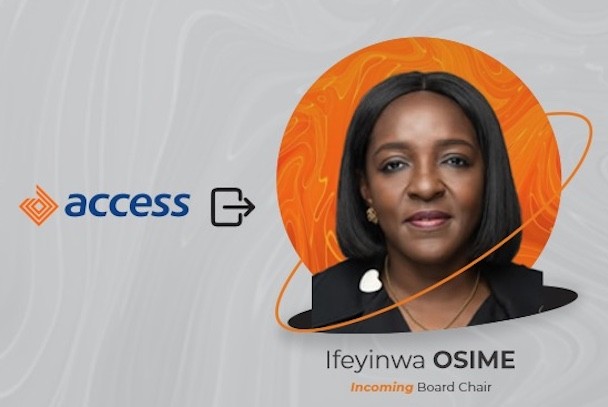
The appointment of Ifeyinwa Osime as Chairman of the Board of Access Bank is not a routine succession. It represents a deliberate recalibration of governance at one of Africa’s most systemically important financial institutions—at a time when banking resilience, sustainability, and institutional trust are under sharper scrutiny than at any point in the past decade.
In an era defined by tighter regulation, heightened stakeholder expectations, and capital that increasingly prices governance quality, board leadership has become a strategic lever. Access Bank’s choice reflects this reality.




Nigeria’s banking sector is operating at a crossroads. Regulatory oversight is intensifying, capital adequacy expectations are rising, sustainability metrics are migrating from the margins to the core, and banks are expected to balance growth with social legitimacy.
Against this backdrop, board effectiveness—not just executive performance—has become a differentiator. The chair’s role has evolved from ceremonial oversight to active stewardship of culture, risk, ethics, and long-term strategy. Osime’s elevation signals that Access Bank understands this shift and is positioning accordingly.
Context: Governance as Competitive Advantage
Access Bank has grown into a pan-African banking powerhouse with expanding international footprints. Scale, however, brings complexity—across jurisdictions, compliance regimes, talent management, and stakeholder accountability.
Osime is not an external appointee learning the system from the outside. Since joining the board in 2019 as an Independent Non-Executive Director, she has chaired critical committees spanning human resources, sustainability, governance, nomination, and remuneration. These are not peripheral functions; they are the institutional spine of modern banking governance.
Her progression to chairmanship reflects continuity with intent—preserving institutional memory while strengthening oversight depth.
Core Analysis: What Osime Brings to the Chair
1. Governance-Centric Leadership
Osime’s professional grounding as a corporate and commercial legal practitioner positions her squarely at the intersection of regulation, fiduciary duty, and strategic discipline. In today’s banking environment, this is not a support skill—it is a core competency.
2. Human Capital and Sustainability Focus
Her prior stewardship of the Board Human Resources and Sustainability Committee aligns with a banking future where talent, culture, and ESG credibility directly influence valuation, investor appetite, and regulatory confidence.
3. Independence with Institutional Fluency
As a former Independent Non-Executive Director, Osime brings the rare balance of independence and familiarity—able to challenge management constructively without destabilising strategic continuity.
4. Broader Ecosystem Credibility
Her roles beyond Access Bank—spanning legal practice, corporate directorships, professional bodies, and social-impact communities—extend the bank’s governance credibility beyond financial metrics into societal relevance.
Leadership Continuity and Strategic Intent
The transition follows the retirement of Paul Usoro, whose tenure contributed to board stability and institutional coherence. Importantly, the succession narrative has been carefully framed by Aigboje Aig-Imoukhuede, Group Chairman of Access Holdings, who emphasised Osime’s alignment with the bank’s values, strategy, and long-term vision.
This continuity matters. In financial institutions of Access Bank’s scale, abrupt governance shifts can unsettle markets. This appointment instead reinforces predictability.
Implications for Business, Markets, and Policy
For investors, Osime’s appointment strengthens confidence in Access Bank’s governance architecture at a time when African banks are being assessed against global benchmarks.
For regulators, it signals a board leadership attuned to compliance discipline, risk oversight, and ethical stewardship.
For the wider corporate sector, it reinforces a broader trend: board chairs are increasingly selected not just for seniority, but for governance fluency, sustainability literacy, and stakeholder intelligence.
It also advances the conversation around gender diversity in leadership—not as symbolism, but as competence-driven inclusion at the highest level of corporate power.
Forward Outlook: What to Watch
Under Osime’s chairmanship, stakeholders should expect:
- Stronger alignment between strategy, governance, and sustainability
- Continued focus on leadership development and board effectiveness
- Tighter oversight of ESG integration and stakeholder accountability
- Governance stability to support regional and international expansion
In a banking era where trust compounds faster than capital, Access Bank appears to be investing deliberately in the former.
BRANDECONOMY INSIGHT
Ifeyinwa Osime’s elevation underscores a quiet but consequential shift in African corporate leadership: the centre of gravity is moving from charismatic executives to institutional stewards. In today’s financial markets, growth stories without governance depth are increasingly discounted.
Access Bank’s decision reflects an understanding that the next phase of banking competitiveness will be won not only in balance sheets, but in boardrooms—where culture is set, risks are anticipated, and long-term value is protected.
This is not just a chairmanship change. It is a governance signal—to regulators, investors, and peers—that Access Bank is aligning leadership structure with the realities of modern banking power.