Abia Signals the Future: Startup Law and Electric Buses Redefine a New Growth Path

Abia State has taken a decisive step toward redefining its economic future, positioning innovation, clean mobility, and youth talent at the heart of a long-term development reset.
With the signing of the Abia State Startup Law 2025 and the rollout of a state-backed electric bus mass transit scheme, Governor Alex Otti’s administration is signalling a clear pivot from consumption-driven governance to innovation-led growth, environmental responsibility, and digital competitiveness.




Building an Innovation Economy from the Ground Up
The newly enacted Startup Law formally domesticates the Nigerian Startup Act 2022, giving Abia a structured legal framework to support technology-enabled businesses, digital entrepreneurs, and innovation-driven enterprises operating within the state.
More than a regulatory exercise, the law establishes Abia as a sub-national player in Nigeria’s fast-emerging startup ecosystem — one increasingly defined by policy clarity, investor confidence, and talent retention.
Under the new regime, qualifying startups with significant operations in Abia can access structured support mechanisms designed to:
- Encourage innovation and intellectual property creation
- Attract early-stage capital and partnerships
- Nurture local digital talent
- Integrate startups into national and global value chains
For a state long known for commerce and manufacturing ingenuity, the law represents a strategic bridge between traditional enterprise culture and modern digital innovation.
Clean Mobility as an Economic Signal
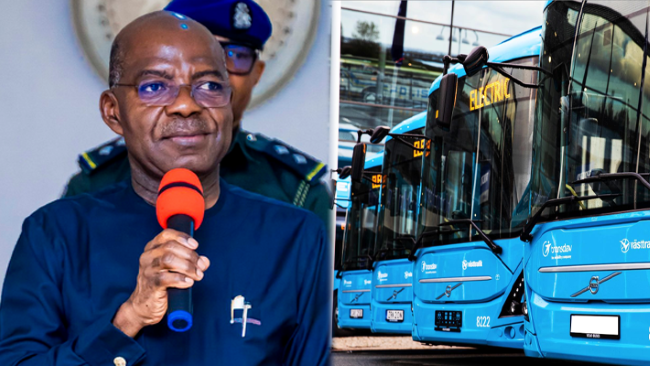
In parallel, Abia is launching one of Nigeria’s most ambitious sub-national clean transport initiatives under the Abia Transport Transformation Project.
The state has taken delivery of its first batch of electric buses, with additional units already scheduled, as it prepares to deploy up to 100 electric buses in the first phase of the programme.
These 40-seater buses — custom-built for Abia’s terrain — are designed to travel up to 400 kilometres on a single charge and are equipped with:
- Digital surveillance systems
- Charging ports
- Disability-friendly access
- Emergency safety features
Beyond emissions reduction, the initiative sends a powerful message: clean energy transition is no longer a federal abstraction — it is becoming a state-level execution priority.
Why This Matters Beyond Transport
Electric buses are not merely a mobility upgrade. They are:
- A demand signal for clean energy infrastructure
- A catalyst for new maintenance, charging, and supply-chain jobs
- A cost-stabilisation tool against volatile fuel prices
- A visible commitment to climate-aligned development
In an era of subsidy withdrawal and rising urban transport costs, Abia’s move positions it ahead of the curve in future-proofing public transport economics.
A Broader Developmental Architecture
These initiatives sit within a wider policy framework being rolled out by the state, including:
- The unveiling of a 25-Year Development Plan, anchoring long-term growth priorities
- Continued investment in digital skills through programmes like Abia Techrise, which has already trained over 1,300 youths
- Expanded healthcare access via the Abia Global Medical Mission
- Ongoing infrastructure rehabilitation ahead of peak economic periods
Taken together, the strategy reflects a governance model focused on systems-building rather than episodic interventions.
The Bigger Picture
Abia’s approach underscores a critical shift in Nigeria’s development narrative: states are no longer waiting for national solutions to define their economic destiny.
By aligning innovation policy, clean transport, human capital development, and long-term planning, Abia is quietly crafting a development identity that speaks to investors, young professionals, and development partners alike.
The message is clear: the future will favour states that legislate for innovation, invest in sustainability, and empower their people early.
BRANDECONOMY INSIGHT
Why Abia’s Move Matters
Abia’s Startup Law and electric bus rollout illustrate how sub-national governments can leapfrog development stages by aligning policy, technology, and climate priorities. In a post-subsidy Nigeria, states that innovate around energy, mobility, and talent will define the next growth cycle.